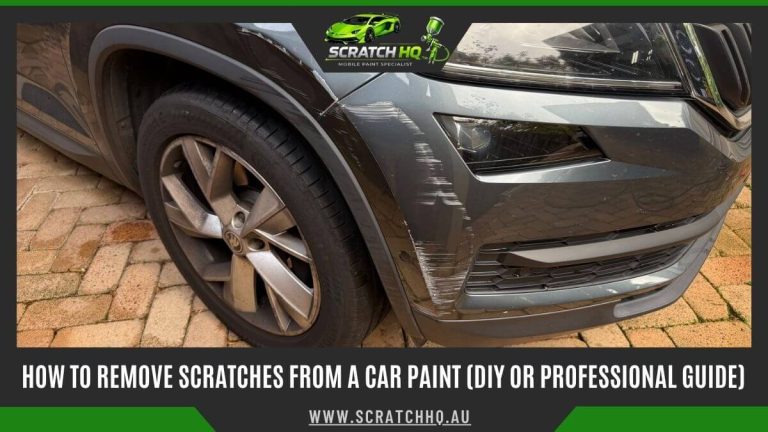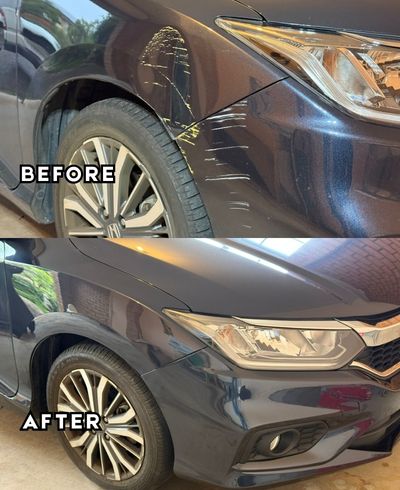
What to do when you find a scratch on your car
A new scratch is frustrating, but a few careful observations make the next conversation much easier. Start by looking at the mark in daylight, when the panel is clean and dry. Note where it sits, how far it runs and whether it crosses a panel edge or trim. Avoid rubbing the area aggressively or applying a product before you know what has been damaged.
Photograph the damage clearly
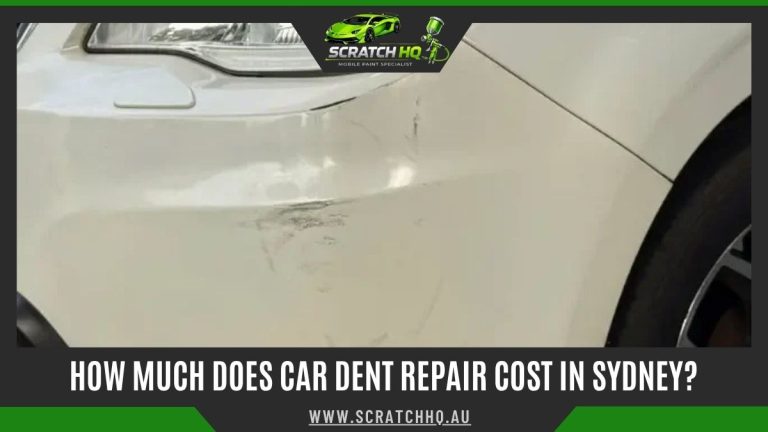
Take one close-up with the scratch in focus and one wider photo showing the entire panel. A third photo from an angle can reveal dents, scuffs and changes in the reflection that a straight-on image misses. Include the make, model and year of the vehicle, plus your suburb. If more than one panel is marked, photograph each one separately.
A coin or ruler beside the scratch can help show its size, but keep it off painted surfaces if it might cause another mark. Natural, even light works better than direct flash. If the car is wet, wait until it is dry: water can temporarily hide fine scratches and make the finish harder to assess.
Check what you can see without testing the paint
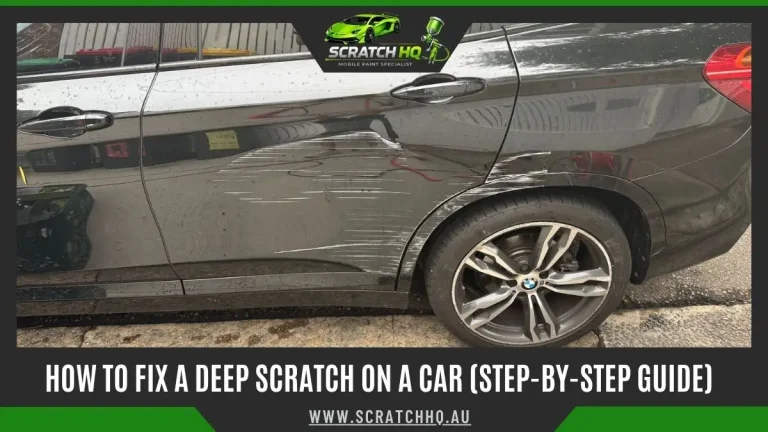
Some marks are transfer from another object, while others have cut through the clear coat or colour layer. You do not need to diagnose the paint yourself. Tell the repairer whether you can see a different colour beneath the mark, whether the panel feels dented, and whether the surrounding paint is cracked or peeling. Do not use a fingernail test or abrasive polish if the finish may already be fragile.
Mention earlier repairs, a special colour or a protective coating if you know about them. Those details can affect the proposed method and colour matching. A photo-based assessment is a starting point; the final repair scope may change when the surface is inspected in person.
Ask about the repair plan
When you request a quote, ask which panel will be worked on, whether paint is likely to be needed, how the finish will be blended and how long the vehicle must remain available. Confirm where the work can take place and whether the location has suitable access and weather protection. Mobile cosmetic repair can suit many localised scratches, while severe damage or work spanning multiple panels may need a workshop assessment.
Keep the photos and the written quote together so you can compare the agreed scope with the finished repair. Clear information at the start helps the team give useful guidance and helps you decide what to do next.