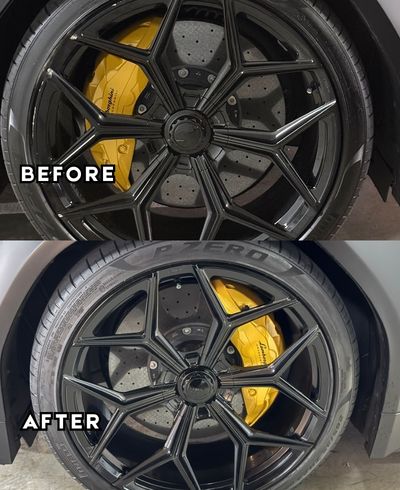
Kerb rash on an alloy wheel: repair or replace?
A scrape on the edge of an alloy wheel is common after contact with a kerb. The visible mark may be mainly cosmetic, but a wheel can also suffer a bend, crack or tyre damage that needs specialist attention. Before choosing a repair, inspect it safely and collect clear photos for an assessment.
Start with the whole wheel
Photograph the full wheel, then take close-ups of each damaged area. Include the tyre sidewall and the point where the tyre meets the rim. Note whether the wheel loses pressure, vibrates, looks bent or has a crack. If any of those signs are present, arrange a tyre and wheel safety check before planning cosmetic refinishing.
Tell the repairer the wheel size if you know it, the vehicle make and model, and whether the damage appears on one wheel or several. Photos taken outside in even light help show the true finish. Wet wheels and harsh reflections can hide texture, chips and the depth of a scrape.
The finish changes the options
Painted, powder-coated, polished and diamond-cut wheels are finished in different ways. A local cosmetic repair may be suitable for a painted wheel with superficial edge damage. A machined or unusual factory finish can require a specialist process to reproduce the original appearance. Deep gouges, missing material or damage close to a spoke also change the assessment.
Ask whether the proposal includes preparation, colour matching, clear coating and any tyre handling. It is useful to know whether the repair is localised or whether the entire wheel face must be refinished. The answer can affect the appearance, cost and time required.
When replacement or specialist work makes more sense
A cracked or structurally damaged wheel should not be treated as a cosmetic job. Likewise, tyre damage must be assessed by a qualified tyre professional. Replacement may be the safer or more practical choice when the wheel cannot be repaired to a suitable standard. For a cosmetic scuff, send the photos and wheel details first so the team can explain which route is likely to fit.
Keep the assessment and quote specific: name the wheel, identify the finish and confirm the work to be done. That gives you a fair basis to compare repair with replacement and avoids assuming that every kerb mark needs the same treatment.